

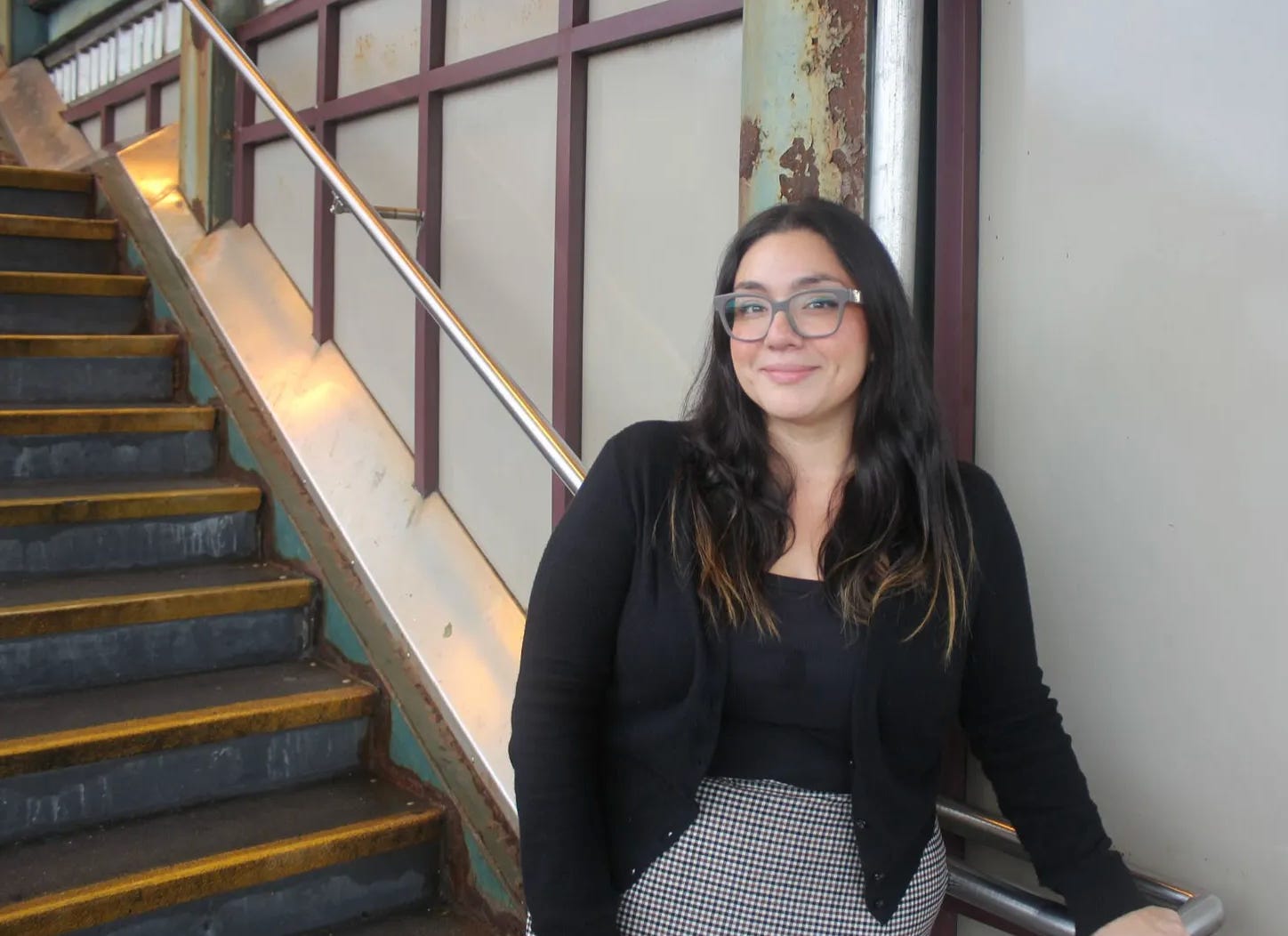
Paraprofessional Alyson Monzon works a second job to cover her expenses (Photo Credit: Sasha Rivers)
Alyson Monzon has worked as a paraprofessional for more than a decade. She makes ends meet by working a second job in retail. “It’s a difficult situation. There are times where I don’t have enough for groceries,” she said.
Paraprofessionals, often called paras, are crucial education workers. They are teacher aides, many of whom are paired one-on-one with students with disabilities to help them with anything from acting as a translator to navigating social issues. There are more than 26,000 paraprofessionals working across New York City public schools. Paraprofessionals earn salaries that start at only $33,222, nearly $11,000 lower than secretary interns, the next lowest-paid educator title in the city.
In July, the City Council aimed to address low pay and persistent staffing shortages in its unanimously passed the RESPECT Check Act. The law provides eligible paraprofessionals with up to $10,000 in nonpensionable payments, distributed in four installments between January and August 2027. After declining to sign or veto the measure, Mayor Zohran Mamdani sued the council, arguing that it had exceeded its authority by awarding compensation outside the collective bargaining process.
Monzon, like many other paras, is concerned that the union and the City Council may be using the check as a reason not to increase their pensionable salaries. “We’re scared that the union is going to say, ‘OK, you guys got that $10,000 check, so now you should be happy with the 3% or 3.5% [raise] that you get,’” she said.
As with other Department of Education employees, the last contract negotiation with the United Federation of Teachers guaranteed education workers a 3% to 3.5% annual raise from 2022 through 2026. For paras, this amounted to about $1,000 a year; for teachers, it was more than three times that amount.
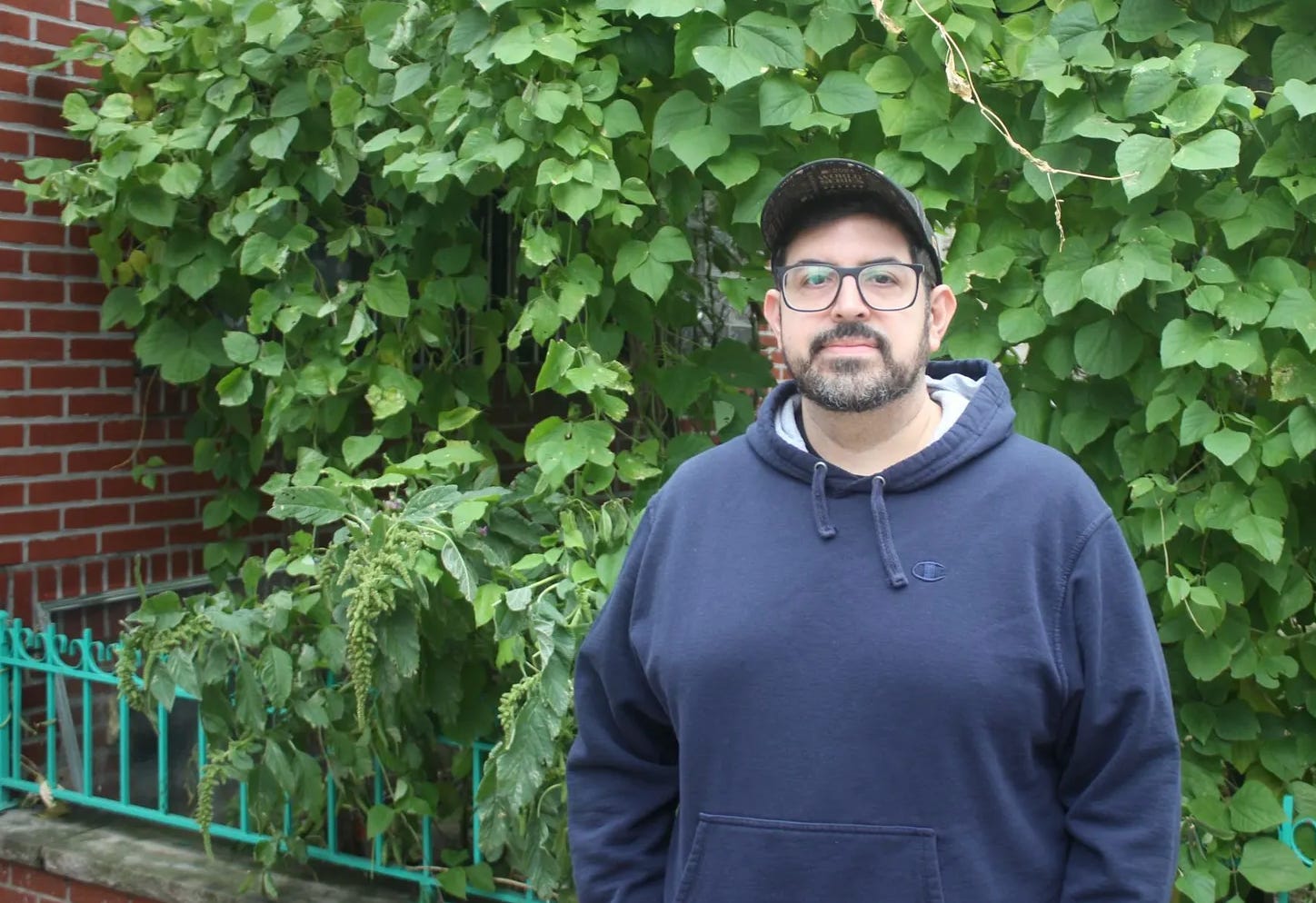
Henry Giraldo would like New Yorkers to understand the financial difficulties paraprofessionals go through (Photo Credit: Sasha Rivers)
Henry Giraldo, a paraprofessional for three years, does not blame the Mamdani administration for a potential delay in the check. “I’m not mad at the mayor, I understand why. I’m just upset with the situation,” he said.
Giraldo, who grew up in the Queens school district where he now works, wants paraprofessionals to be paid more. He’d like New Yorkers to know how badly many of these workers are struggling. “I know many paraprofessionals who work two or three jobs,” he said. “I can’t imagine, even with two or three jobs, how they’re surviving in this economy.”
The lawsuit remains pending in the New York County Supreme Court. The UFT and City Council are expected to file motions to dismiss; the council’s motion is due Nov. 2.
In an email reviewed by Columbia News Service, the UFT told paraprofessionals that despite the legal battle, “the RESPECT check legislation remains a law, and paraprofessionals can still expect to receive their first payment in January.” At a Sept. 17 rally, City Council Speaker Julie Menin was asked what would happen to the payments if the lawsuit continued past Jan. 1. “The mayor could make that decision tomorrow,” she replied.
The mayor’s stated reason for challenging the law is consistent with what many paraprofessionals say they want, a permanent salary increase negotiated through collective bargaining.
“For too long, [paraprofessionals’] invaluable contributions to our schools have not been fairly compensated. We have been negotiating in good faith to address this inequity permanently,” Matt Rauschenbach, a spokesperson for the mayor, wrote in a statement to Columbia News Service.
City Council Member Carmen De La Rosa disputed the mayor’s allegations that the council was attempting to circumvent collective bargaining. “We are trying to fix an issue that collective bargaining has left at the table for generations,” she said.
Anise Banks, a paraprofessional for six years, says she can not afford to wait for collective bargaining, which is set to begin next year. “We don’t know how long we’re going to be fighting for [the money], so let us just get this [check] while we’re waiting for us to fight for it to be a yearly, consistent thing,” she said. Although she has trouble making ends meet, Banks cannot work a second job because she needs to be home to care for her son. This year, she has relied on food pantries for many of her groceries.
While paraprofessionals might disagree about how the pay increase should be delivered, they agree that the money would make a meaningful difference.
“You don’t make $35,000 [a year] and $10,000 is something you ignore,” said Jeremiah Bornemann, a paraprofessional of 14 years.
Despite the low pay, paraprofessionals love their jobs. Each para who spoke to Columbia News Service gave the same refrain: They’re in it for the kids.
“Being a product of the school system myself, and also serving the community that I grew up in, I see myself in my students,” Giraldo said.
About the author: Sasha Rivers is a master’s student specializing at the Stabile Center for Investigative Journalism. Prior to CJS, she served in the Peace Corps in the nation of Lesotho.
Columbia News Service publishes the work of enrolled students at the Columbia University Graduate School of Journalism in New York City. For more of their stories, please visit www.columbianewsservice.com.